Over the last few years a number of stories have hit the national news when celebrities have collapsed in Cardiac Arrest and have been resuscitated with a portable defibrillator as told in the stories below.
The reality is that around the world 100’s of lives are being saved every year due to the availability of portable defibrillators, most of them never making the national news.
Public Access Defibrillators UK alone has saved 23 lives over the last 10 years, and here are the stories of celebrities and ordinary people alike who owe their lives to defibrillators and the actions of bystanders.
Fabrice Muamba
 Fabrice was born on April 6th 1988 in Zaire, now known as the Democratic Republic of Congo. He moved to England when he was 11 years old and progressed to play for England under 21s. Fabrice played for Arsenal, Birmingham City and Bolton Wanderers, the team he was playing for at the time of his cardiac arrest.
On the 17th March 2012, during the televised FA Cup match between Tottenham Hotspur and Bolton Wanderers at White Hart Lane, Fabrice went into ventricular fibrillation. This medical emergency happens rapidly and involves chaotic electrical activity in the heart. It stops pumping in its usual way so oxygenated blood cannot pump from the left to right ventricles. It happened in the 43rd minute of the game, when it was said “He fell like a tree trunk.”
Fabrice was lucky, lucky that there were five medically trained assistants, Johnathan Tobin, the Wanderers doctor, and a St John Ambulance Unit on site to assist him. Even luckier though, was the fact that Dr Andrew Deaner, a cardiologist at London’s Chest Hospital in Bethnal Green was spectating.
Initially, two stewards wouldn’t let him on the pitch to assist; they “didn’t want to know.” He found an older steward who then let him on the pitch to attend to Fabrice. Having arrived at the scene, he said he “could see they were doing very good CPR. They had the defibrillator ready.”
Two defibrillator shocks were administered on the pitch, one in the tunnel as he was being moved by stretcher and twelve more in the ambulance. Although his heart stopped for 78 minutes, he survived.
Bernard Gallagher
Bernard Gallagher, the former professional golfer who played in eight Ryder Cup competitions and captained Europe three times is a cardiac arrest survivor. In August 2013, aged 64, he was left in a coma for seven days. “My cardiac arrest poleaxed me- I was medically dead.”
He has no recollection of what happened and has said “It’s very difficult to register something which still seems surreal.”
At his wife’s suggestion, he leads a campaign to raise awareness of the need to have defibrillators available at golf courses and other public venues.
In total, Bernard died three times, each time the defibrillator brought him back. He said, “the danger of a cardiac arrest is that it just happens.”
He was just standing up to give a speech at a golf club in Aberdeen and had just had a meal as a guest speaker. He fell to the floor like he had been hit by a boxer. Some spectators at the event thought it was part of the talk “slapstick comedy before a Ryder Cup speech.”
Luckily for Bernard, two nurses were on hand at the hotel and knew exactly what to do. One, who was an acquaintance of Bernard’s, said to him after “She didn’t like the look of him when he stood up.” She also mentioned that earlier in the day she thought he had been slurring his words.
First, Bernard was given mouth breaths for 20 minutes, followed by a shock from the hotel’s defibrillator. It was administered by the hotel’s Health and Safety Defibrillator Instructor.
Whilst in transit aboard the ambulance a defibrillator was needed a few more times. On board the ambulance with Bernard was Doctor Mark Bloch. Bernard said “I really was gone. I was medically dead but he kept me going. I was very lucky.”
Christian Eriksen
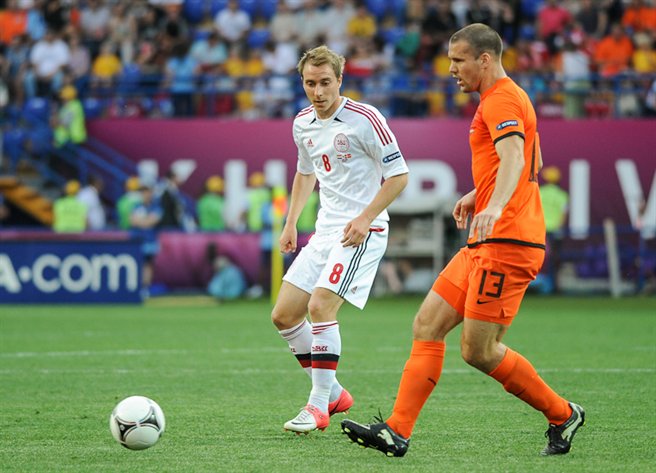 Swift action was crucial to Christian Eriksen’s survival when the midfielder collapsed during the first half of Denmark’s opening game in the Euro 2020 championship against Finland.
Denmark’s team doctor, Morten Boesen, confirmed that the 29-year-old had gone into cardiac arrest on the pitch and was brought back through a combination of CPR – the manual cardiopulmonary resuscitation that involves repeated pushing down on the chest – and an electric shock from a defibrillator.
Unlike a heart attack, where the heart tends to keep beating, cardiac arrest is a more sudden and dramatic event. Because the heart no longer pumps blood around the body, the critical oxygen supply to the brain and other organs is cut off, presenting an immediate threat to life.
Boesen said the quick reaction of the medical team in treating Eriksen was decisive for his survival and the evidence bears this out. The difference between life and death, or severe brain damage caused by oxygen starvation, is a matter of minutes. In the UK, only 10% of people who suffer cardiac arrest outside of hospitals survive the ordeal. The rate is so low, in part, because people do not get CPR or defibrillation fast enough.
In cardiac arrest, the heart can develop such an unnatural rhythm that it quivers more than beats. This chaotic electrical activity can be reset with a defibrillator by sending an electric shock across the muscle. In Eriksen’s case, one shock from the defibrillator was sufficient to regain his heartbeat. By delivering CPR at the same time, the team ensured a flow of blood around his body.
Ryk Downes
 Councillor Ryk Downes was out on one of his regular runs when he collapsed in Sudden Cardiac Arrest in Pool-in-Wharfedale, Yorkshire. The 51-year-old received vital CPR from a passerby while another person took the community defibrillator from a nearby cabinet and successfully shocked his heart back into life.
He was then airlifted to Leeds General Infirmary by Yorkshire Air Ambulance. His family said he was now recovering well, though he suffered several broken ribs from the chest compressions that were given to help him.
His daughter, Sherri, said: “It’s been a rough couple of days, thank you so much to everyone who has messaged and sent all their love and warmest wishes.
“He is going to need a heart bypass at some stage in the near future, but the main thing is he’s now fully awake and communicating and doing amazingly well, he has been so lucky, we thank the Lord so much.
He owes his life to the actions of a number of people, Brian Firth for founding Public Access Defibrillators UK and obviously to the individuals who performed the resus and used the defibrillator.
Only a few months after his Cardiac Arrest, Ryk, along with his wife and daughter did the Leeds Half Marathon with a defibrillator on his back and raised funds for an additional 3 Community Public Access Defibrillators. The photo shows Ryk and his wife Bev at the Marathon.
Trevor Hopton
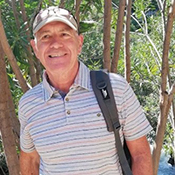
Cyclist, Trevor Hopton, was saved by a defibrillator that was installed only two weeks earlier, funded by a local Yeadon resident in conjunction with Public Access Defibrillators UK.
Trevor later contacted Public Access Defibrillators UK, saying:
I am the person who collapsed and suffered a sudden cardiac arrest opposite the Woolpack pub near the JCT roundabout, the defibrillator at this location was used and saved my life.
On Saturday 19th January 2019 I was out cycling with a friend, we had stopped at the traffic lights at this location, I suddenly collapsed and fell to the floor, my friend and another person put me in the recovery position but my breathing was becoming very shallow.A bystander, Captain Andrew Plant, just happened to be an army bloke with first aid training. Then a car stopped and a gentleman got out who I later discovered was Dr James Beck, an off duty ICU consultant working at St James hospital. They immediately commenced CPR whilst the lady that had dialed 999 accessed the Public Access Defibrillator that was literally 6 metres away, using the code provided by the 999 operator.
I was shocked 3 times before my heart came back into beating and breathing.
The ambulance arrived within 7 mins and I was in Resus for 5hrs at the LGI before being moved to a cardiac ward. I was discharged on Friday 25th Jan and now recovering at home.
All the hospital medical team say that time is critical in that situation, had it not been for some very kind people and the community defibrillator nearby I would not be here today sharing this with you and my family.
FOOTNOTE: Trevor went on to raise funds for 4 Community Public Access Defibrillators which have been installed in his community, Horsforth Vale. Brian Firth put Captain Andrew Plant and Dr James Beck forward for a national Life Saving award with the ‘Hand on Heart’ charity, which they won.
John Goldthorp
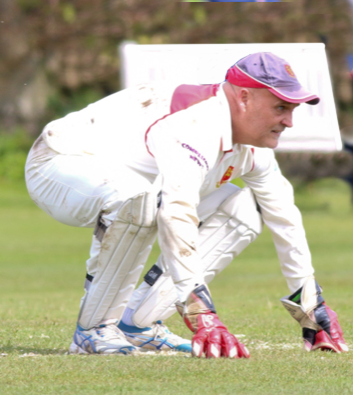
This incident occurred at the Pool-in-Wharfedale Sports & Social Club when keen cricketer John Goldthorp collapsed in Cardiac Arrest following a Saturday cricket match. Incredibly, it was his wife Andrea that applied the defibrillator pads and performed the necessary procedure that resulted in Johns heart being re-started. I understand that she was assisted by other club members who performed CPR, including 2 off duty police officers. John was then safely transferred by ambulance to the hospital where he has made a remarkable recovery. Brian knows from his days as a volunteer Community First Responder with the Yorkshire Ambulance Service that whilst very rewarding, it can also be quite distressing dealing with a Cardiac Arrest, and that is when treating a stranger. He cannot imagine how it must feel treating your own partner when he is in Cardiac Arrest.
Ironically, this CPAD was originally funded by Otley and Yeadon Councillor Ryk Downes following his life having been saved by another CPAD located in Pool.
FOOTNOTE: Johns family and friends have since raised sufficient funding for an additional 4 Public Access Defibrillators.